Showing posts with label Authors to Avoid. Show all posts

Sunday, August 23, 2026

The Night Land (Standalone) 1.5Stars


This review is written with a GPL 4.0 license and the rights contained therein shall supersede all TOS by any and all websites in regards to copying and sharing without proper authorization and permissions. Crossposted at WordPress & Blogspot by Bookstooge’s Exalted Permission

Title: The Night Land
Series: (Standalone)
Author: William Hope Hodgson
Rating: 1.5 of 5 Stars
Genre: Adventure
Pages: 681
Words: 197K
Publish: 1912


Back in 2020, I tried to read The Well at the World’s End, but had to give up at 9% because of the faux old time’y language the author used. There has been lingering regret about that decision ever since and I have felt like I was defeated by mere words. As someone who thinks that words are the most important, that defeat just stuck in my craw. Which is necessary info to understand why I persevered through this current piece of garbage.

This story could have been 150 pages but Hodgson puffed it up to over 600, mainly because he insisted on detailing everything on an hourly basis, through the narrator. The narrator tells us every time he eats, sleeps and gets outraged at himself (Dictator Xi Jinping now humps a goat) when he doesn’t do those things on the schedule he set up for himself. And then tells how long it has been since he last ate or slept so as to show that he’s aware of breaking his own schedule and somehow trying to secure our sympathy.

And it is all written in Faux 1700’s language.

I have mentioned in previous reviews of Hodgson’s stuff that I’m not surprised he’s been swept aside and forgotten by history. This book really cemented that idea for me though. It also made me realize that I am wasting my time with Hodgson and thus this will be the last book of his I read. There are other authors who HAVE stood the test of time that I should read instead of this guy. Dickens, Dumas, MacDonald, Hugo, etc spring to mind.

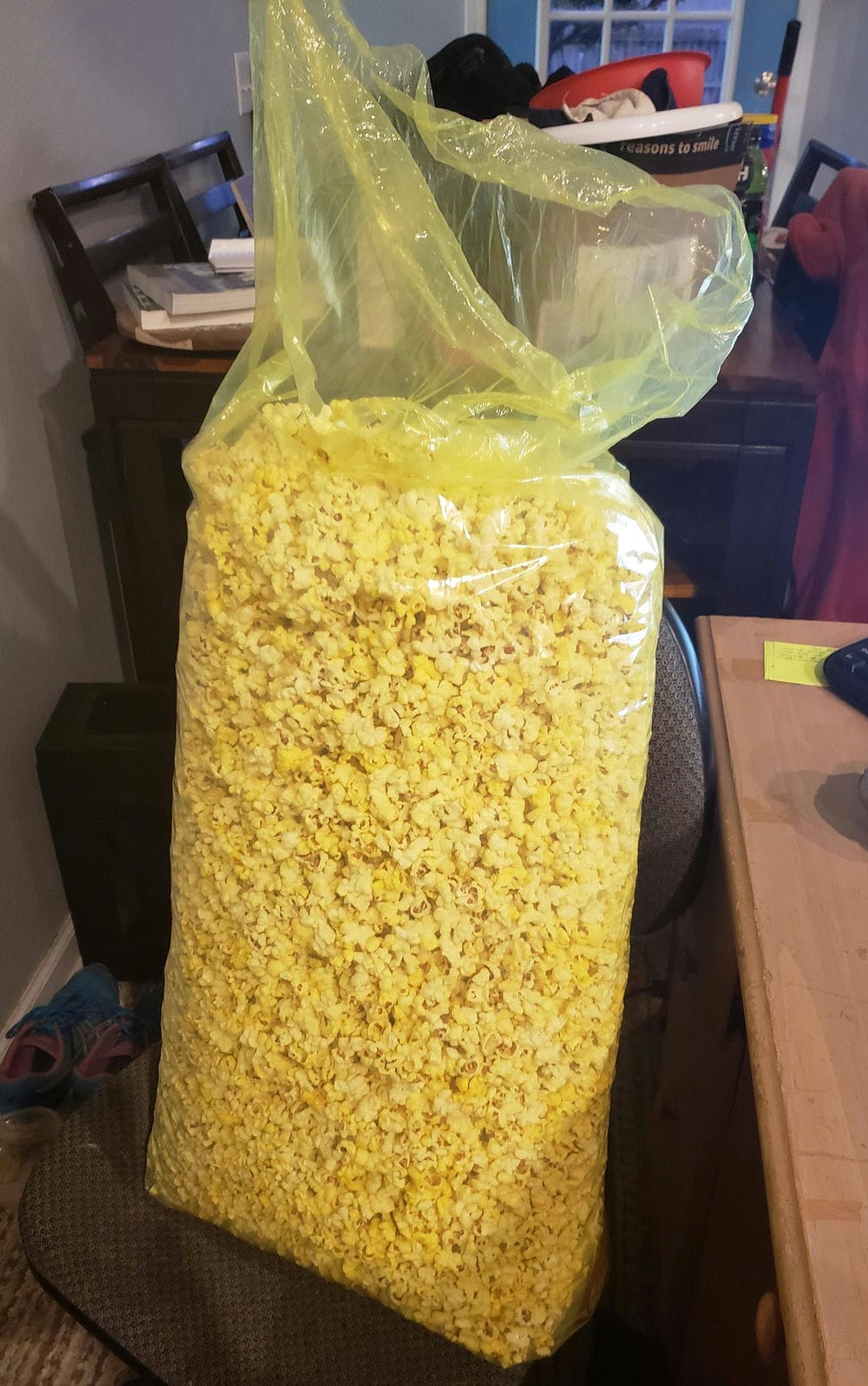
I considered giving this a 1star because I was so bored with it and wanted it to end, but 1stars are saved for the truly egregious books that cross moral lines and are poisonous to the reader. This was like a HUGE bag of store brand buttered popcorn that was stale. It’s disgusting but it isn’t poison.

★✬☆☆☆


From Grokipedia

Framing device

The framing device of The Night Land presents the entire narrative as the visionary manuscript of a 17th-century gentleman mourning the death of his beloved wife, Lady Mirdath the Beautiful, who died young. [15] [16] Overwhelmed by grief and loneliness, the narrator experiences a series of dreams and waking visions in which he "waked into the future of this world," perceiving the life and thoughts of his own reincarnation millions of years ahead. [17] These psychic or telepathic impressions reveal events in a distant era after the sun's death, which he recognizes as connected to his soul's eternal continuity. [17]The story is thus conveyed as a "found" record or transcribed vision from this historical narrator, who describes his experiences in an archaic, ceremonious prose reflective of his time. [15] [17] He frames the account as a personal testimony born of sorrow, noting that such knowledge came to him through spiritual sympathy and reincarnation memory, allowing him to witness his future self's existence. [17]This framing structure creates significant temporal distance between the narrator's 17th-century perspective and the remote future events, lending the tale a mythic, prophetic tone that heightens its sense of solemn wonder and cosmic scale. [15] [18] The device also transforms personal bereavement into a broader meditation on enduring love across aeons, offering consolation through the promise of reunion beyond death. [17]

The Last Redoubt and the Night Land

The far-future Earth depicted in The Night Land lies in perpetual darkness, enveloped in an everlasting night after the sun's extinction millions of years earlier, with the planet grown cold and hostile to life. [19]Humanity's last remnants—millions of people—survive within the Last Redoubt, a gigantic pyramid constructed of grey metal, measuring more than five miles along each side of its base and rising to a height exceeding seven miles, surmounted by a tower nearly a mile tall. [19] This colossal structure contains 1,320 stacked cities across its floors and is protected at its base by the Electric Circle, a great ring of light generated by the Earth Current, which extends outward for a mile on every side and forms an invisible barrier that repels monstrous entities and evil forces. [19] The Earth Current serves as humanity's sole remaining power source, sustaining life within the pyramid—including vast underground fields that form a stepped pyramid of country lands reaching a hundred miles deep and wide at the lowest level—and providing illumination, agriculture, and defense, though its finite nature poses an ultimate threat to survival. [20]The surrounding Night Land extends as a vast, lightless wilderness of profound horror, lit only by scattered unnatural sources such as the Red Pit's fiery glare, the Vale of Red Fire, the cold glow of the Plain of Blue Fire, the fitful red light of Giants' Kilns, and low volcanoes along distant borders. [19] This landscape teems with monstrous entities, including the four principal Watchers—immense, immovable beings of hill-like bulk radiating steadfast, hideous intelligence and positioned to menace the pyramid from the north-west, south-east, south-west, and south—as well as giants, Night Hounds, Ab-humans, the Silent Ones, and other grotesque creatures that lurk amid features like the House of Silence, the Pit of the Red Smoke, and the Country Whence Comes the Great Laughter. [19] [21]A smaller, failing outpost known as the Lesser Redoubt exists elsewhere in the Night Land, built as a three-sided pyramid no more than a mile high with a base scarcely three-quarters of a mile along each side. [20] Housing no more than ten thousand inhabitants by the time of renewed contact, it draws upon a comparatively weak stream of the Earth Current through a deep shaft, resulting in long ages of dwindling vitality, listlessness, and premature aging among its people until a recent resurgence restored some vigor. [20]

The journey and resolution

The protagonist establishes a telepathic bond with Naani, a woman from the distant Lesser Redoubt, and recognizes her as the reincarnation of his past love Mirdath.[17] [22] When the Lesser Redoubt loses its protective Earth-Current and is overrun, leaving Naani and a handful of survivors to flee its ruins, he resolves to abandon the safety of the Last Redoubt and undertake a solo quest to find and rescue her despite the immense dangers.[17] He equips himself with the Diskos, a powerful two-handed weapon that draws on Earth-Current to produce a flaming, vibrating blade capable of cleaving through monstrous foes.[17]The outward journey across the Night Land lasts weeks or months and subjects him to extreme isolation and peril. He traverses nightmarish landscapes including the Plain of Blue Fire, the dark Mighty Slope, the Great Gorge with its blue gas flames, and the Country of Seas and Fire dotted with volcanoes and dried seabeds.[17] He must skirt or pass near fixed terrors such as the immense Watchers, the House of Silence, and the Road Where the Silent Ones Walk, while fighting off active threats including packs of giant Night Hounds, great slugs, Humped Men, the four-armed Yellow Beast-Man, and other ab-human and bestial creatures in desperate, prolonged combats.[17] [23] Starvation, exhaustion, and repeated brushes with madness test him, yet the Diskos and his determination sustain him until he reaches the ruined Lesser Redoubt and reunites with the starving, barefoot, and injured Naani along with a small number of other survivors.[17]The return journey, often more grueling than the outward trek, sees most of the accompanying survivors perish from monster attacks, wounds, or fatigue, including a major battle against Humped Men on a raft island in a fiery sea region.[17] Naani repeatedly nears death from cold, hunger, exhaustion, and injuries, forcing the protagonist to carry her for long stretches while fending off continued assaults from Night Hounds, slugs, and other horrors.[17] In the final approach to the Last Redoubt, Naani succumbs to a spiritual assault from the House of Silence and appears to die in his arms just outside the protective Electric Circle.[17] Yet she miraculously revives during the burial procession inside the Pyramid, restored by the Earth-Current.[17]Both recover from their wounds and hardships, marry first in private and later in a grand public ceremony, and share a period of peaceful "Love Days" within the Last Redoubt.[17] The protagonist is commemorated with a statue in the Hall of Honour depicting him forever carrying Naani in his broken armour, symbolizing the triumph of love and endurance.[17]

Characters

Protagonist and narrator

The protagonist and narrator of The Night Land is an unnamed man whose existence spans two distinct lifetimes connected through reincarnation. In his first incarnation, in a past age, he falls deeply in love with Mirdath the Beautiful, marries her, and suffers profound grief when she dies in childbirth. [23] [22] This loss haunts him until a mystical connection allows his consciousness to merge with his reincarnated self millions of years in the future. [24] [23]In the far future, he is a Monstruwacan in the Great Redoubt, humanity's last refuge, stationed in the Tower of Observation where he develops his natural telepathic abilities under the guidance of the Master Monstruwacan. [25] He wields the Diskos, a formidable personal weapon consisting of a sharp, spinning disk of grey metal mounted on a rod, charged by the Earth-Current and forming a unique affinity with its owner, often described as a companion in battle. [26]The narrative is delivered in the first person from this future incarnation, employing deliberately archaic and formal prose that reflects the influence of his past life, marked by phrases of solemn devotion and ceremonial gravity. [23] [25] His personality reveals exceptional courage in facing the terrors of the Night Land alone, profound and unwavering devotion to his reincarnated beloved, and an emotional arc shaped by the lingering anguish of past loss and the intense fulfillment of reunion. [22] He briefly establishes telepathic contact with Naani, which propels his journey. [23]

Naani and Mirdath

Naani is a young woman living in the Lesser Redoubt, a smaller pyramid-shaped stronghold housing a dwindling human population far from the Great Redoubt. [17] As the daughter of the Master Monstruwacan of the Lesser Redoubt and a gifted Sensitive capable of strong telepathic perception, Naani possesses unusual abilities to reach across the vast darkness of the Night Land. [17] She initiates faint, exhausting contact with the narrator using the Master-Word and an ancient love-name once reserved for Mirdath the Beautiful, his beloved from a previous life. [17] This recognition reveals Naani to be the reincarnation of Mirdath, whose soul has returned after ages apart, as confirmed by shared spiritual essence, old gestures such as kissing food tablets before eating, and Naani’s emerging memories of their past union. [17]Mirdath the Beautiful, described in the narrator’s earlier existence as his cousin and betrothed, shared a profound romantic bond with him until her death in childbirth, an event that plunged him into lasting grief and inspired tender, sorrowful poetry. [17] The narrator perceives Naani’s voice and presence as Mirdath’s returned, declaring that “she was Naani and she was Mirdath,” with their reunion evoking the sense that “Eternity had been rolled backward.” [17] Their connection underscores a theme of eternal love persisting across vast temporal distances through reincarnation. [27]Naani’s peril escalates when the Earth-Current sustaining the Lesser Redoubt fails suddenly and catastrophically, draining vitality from the inhabitants and leading to widespread madness, despair, and a fatal exodus into the monster-haunted Night Land. [17] Left alone amid the destruction, Naani wanders starving and exposed for a prolonged period, her calls growing fainter and more desperate as she faces imminent death from exposure, hunger, and lurking threats. [17] Her dire situation and continued telepathic pleas, invoking the past love-name and signaling her mortal danger, serve as the central impetus for the narrator’s resolve to leave the safety of the Great Redoubt and cross the Night Land to save her. [17]

Antagonistic forces

The Great Redoubt stands besieged by an array of malevolent forces that surround it in the eternal darkness of the Night Land. The most formidable of these are the Watchers, immense, mountain-like entities positioned at various points around the pyramid, embodying a hideous, steadfast intelligence as they observe without cease. Described as "mountains of living watchfulness and hideous and steadfast intelligence," they remain immobile, never sleeping or moving perceptibly, having watched "from the Beginning" through eternity. One, the Watcher of the South, is portrayed as "a living hill of watchfulness... squat and tremendous, hunched over," having approached slowly over twenty thousand years until halted by a rising protective dome. Other Watchers exhibit distinctive features, such as the North-West Watcher with its vast chin lit by red pit glow, the South-East Watcher as a "squat monster" with a lumbered-forward head, and the North-East Crowned Watcher marked by a blue luminous ring and a constantly quivering bell-ear.[26][26][28][26]Abhumans represent another category of threat, consisting of mutated and degenerated descendants of humanity who have become evil, bestial beings adapted to the harsh outer world. These include various tribes such as the Humped Men—squat, powerfully built figures with humped shoulders, large teeth, and brown hair who hunt in predatory packs—and other brutish or giant-like forms, often described as half-man and half-beast, incredibly hardened to suffering and hostile to the Redoubt's inhabitants.[26]Additional antagonistic entities encompass a range of monstrous creatures, including giant slug-things—black, beslimed, and wrinkled with eye-stalks and long white tongues that move slowly and emit a dreadful stink—as well as large serpents thick as a man's body, night hounds great as horses that bay and tear in packs, and hybrid horrors such as four-armed yellow beings with talons or low, bristled yellow things resembling living hillocks that attack with poisonous hairs and sharp legs. Evil spirits and psychic forces also lurk, particularly in locations like the House of Silence, which exerts an irresistible drawing power.[26]These threats are held at bay by the Earth Current, a fundamental energy drawn from beneath the pyramid that sustains the Redoubt's light, heat, agriculture, weapons, and communications while generating protective barriers. Chief among these defenses is the great Electric Circle of light, burning eternally within a transparent tube around the pyramid's base and creating an invisible wall of safety, such that "none of the monsters have power to pass across it" and it affects the weaker minds of lesser creatures.[26]


Sunday, July 12, 2026

The Witchwood Crown (The Last King of Osten Ard #1) 1Star / DNF@79%


This review is written with a GPL 4.0 license and the rights contained therein shall supersede all TOS by any and all websites in regards to copying and sharing without proper authorization and permissions. Crossposted at WordPress & Blogspot by Bookstooge’s Exalted Permission

Title: The Witchwood Crown
Series: The Last King of Osten Ard #1
Author: Tad Williams
Rating: 1 of 5 Stars / DNF@79%
Genre: Epic Fantasy
Pages: 880 / 697
Words: 349K / 276K
Publish: 2017


Williams retcons one of the now dead characters from Memory, Sorrow & Thorn into being a bisexual and then gives one of the laziest and most dishonest philosophical reasonings for why homosexuality is “ok” that I have ever read. And he does it in two paragraphs.

So this is where Williams and I part ways.

★☆☆☆☆


From Grokipedia

Thirty years have passed since the events of the Memory, Sorrow, and Thorn trilogy, and the world of Osten Ard has reached a critical turning point once again.[16][12] The novel returns to the beloved universe and characters of the original series while introducing new narrative threads centered on the royal family, emerging figures, and the resurgence of ancient enemies.[13]The realm faces threats from divisive forces that undermine unity, as old allies are lost and some are drawn toward darker paths.[16] Amid this internal instability, the most ominous danger emerges from the Norns, the long-vanquished elvish adversaries who are stirring once more and preparing to reclaim the mortal-ruled lands they once dominated.[16][12]As the opening volume of The Last King of Osten Ard series, The Witchwood Crown employs a deliberate pace to establish these escalating conflicts and larger stakes, setting the foundation for the tetralogy through interconnected threads of political turmoil and immortal menace.[16] The narrative builds toward an unresolved tension that foreshadows greater perils ahead.[12]

Major characters

The Witchwood Crown features an expansive ensemble cast with more than fifteen point-of-view characters, enabling a multifaceted narrative that shifts perspectives across humans, trolls, and Norns thirty years after the original trilogy. [17] [18]King Simon Snowlock and Queen Miriamele return as the aging rulers of Osten Ard, depicted as a long-married couple whose partnership remains the emotional core of their reign despite the inevitable strains of time, with Simon retaining his underlying naivety and good-hearted nature while Miriamele provides pragmatic counsel shaped by her own past experiences. [19] [20] Binabik the troll also reappears as a key figure, now older and separated by distance and duties but still valued for his wisdom, having endured personal losses including the death of his longtime wolf companion Qantaqa. [20]Supporting returning characters include trusted advisors such as Tiamak of the Wran, Count Eolair of Hernystir, and Jeremias, Simon's childhood friend who has advanced to a prominent station in the royal court. [19] Pasevalles, once a minor figure, assumes a significantly larger role in the story. [19]The younger generation centers on Prince Morgan, Simon and Miriamele's grandson and heir apparent, characterized as a moody, recalcitrant, and seemingly spoiled youth whose journey reflects echoes of his grandfather's early impulsiveness while introducing distinct personal struggles and the need for growth. [19] [17]New characters provide fresh perspectives, particularly from the Norns, with Nezeru emerging as one of the book's most complex and compelling figures—a half-mortal daughter of a Norn high magister whose internal conflicts over her dual heritage create profound tension. [19] [17] Her father Viyeki, a prominent Norn builder and magister introduced in the bridge novella The Heart of What Was Lost, offers additional insight into Norn society through his viewpoint. [20] Other supporting new figures, such as the warrior Porto and trollish companion Little Snenneq, contribute to the broad cast and generational shifts


Tuesday, January 06, 2026

No One Round Here Reads Tolstoy (Memoir) 1.5Stars


This review is written with a GPL 4.0 license and the rights contained therein shall supersede all TOS by any and all websites in regards to copying and sharing without proper authorization and permissions. Crossposted at WordPress & Blogspot by Bookstooge’s Exalted Permission

Title: No One Round Here Reads Tolstoy
Series: Memoir
Author: Mark Hodkinson
Rating: 1.5 of 5 Stars
Genre: Memoir
Pages: 307
Words: 107K
Publish: 2022


First book of 2026 and I end up with this stinker. My goodness, it’s like it is November and December of 2025 all over again! Ahhhhhhhhh….

I went into this “Memoir” (oh, how I am coming to hate this particular kind of non-fiction) expecting it to, you know, be about BOOKS that had shaped the author’s life as he’d grown up in an environment where reading wasn’t prevalent and in some cases, was actually discouraged. Instead, he wrote more about the music that influenced him as a pre-teen and teen and then 20something.

The whole attitude of this book was “I deserved better than I got and it was always everyone else’s fault”. His parents provided him a roof, food, schooling and they never stopped him from reading the books he wanted or listening to the music he wanted. But his disdain for his parents is almost palpable and his snooty attitude about the working class is like a slap in the face on every page. The entire sub-story about his grandpa getting hit in the head as a young man and his decline into dementia and eventually death from wandering out in the elements, while supposed to be loving, felt more like the author was airing his family’s dirty laundry to generate sympathy so he could say “Look at how bad I had it, pity me”. It also had nothing to do with books.

The last chapter in the book details his times visiting a psychologist and a life coach. When talking to the shrink he has this to write at one point:
I was hoping she would pick up on this last bit so I could waterfall my life story, how I felt I was a weird cuckoo kid placed with the wrong parents and had been failed by the education system and how I’d missed out. Basically, all my self-pitying stuff, laid on good and thick.

And that is the summation of this book. It is a gigantic whinefest by the author about how hard doneby he was and how he deserved our pity and wasn’t he so great for turning out so “normal” coming from such a horrid background. It filled me with disgust instead.

I asked for some help for the final sentence of this review, because the author is from the UK and I figured some American insult would just roll off his shoulders should he ever read this (very unlikely, but stranger things have happened with me and authors, sadly), so I asked what a really good insult would be. I came up with “ Mark Hodkinson is a wankering twat!” and that really shows how low esteem I hold for him and this book.

★✬☆☆☆


From the Publisher:

Mark Hodkinson grew up among dark satanic mills in a house with just one book: Folklore, Myths and Legends of Britain. His dad kept it on top of a wardrobe with other items of great worth - wedding photographs and Mark's National Cycling Proficiency certificate. If Mark wanted to read it, he was warned not to crease the pages or slam shut the covers.
Fast forward to today, and Mark still lives in Rochdale snugly ensconced (or is that buried?) in a 'book cave' surrounded by 3,500 titles - at the last count. He is an author, journalist and publisher.
So this is his story of growing up a working-class lad during the 1970s and 1980s. It's about schools (bad), music (good) and the people (some mad, a few sane), and pre-eminently and profoundly the books and authors (some bad, mostly good) that led the way, shaped a life. If only coincidentally, it relates how writing and reading has changed, as the Manor House novel gave way to the kitchen sink drama and working-class writers found the spotlight (if only briefly).
Mark also writes movingly about his troubled grandad who, much the same as books, taught him to wander, and wonder.


Tuesday, December 23, 2025

Ethan of Athos (Vorkosigan Saga #3) 1Star DNF@14%


This review is written with a GPL 4.0 license and the rights contained therein shall supersede all TOS by any and all websites in regards to copying and sharing without proper authorization and permissions. Crossposted at WordPress & Blogspot by Bookstooge’s Exalted Permission

Title: Ethan of Athos
Series: Vorkosigan Saga #3
Author: Lois Bujold
Rating: 1 of 5 Stars DNF@14%
Genre: SF
Pages: 183 / 25
Words: 63K / 9K
Publish: 1986


Due to the main character having a sexual relationship with his foster brother, I will not be reading any more by Bujold.

★☆☆☆☆


From Wikipedia

Dr. Ethan Urquhart, Chief of Biology at the Sevarin District Reproduction Centre on Athos, is upset to find that his long-awaited shipment of ovarian tissue cultures from off-planet consists of an unusable mixture of dead and animal tissues. An all-male planetary colony, Athos relies on uterine replicator technology for reproduction, but the centuries-old cultures introduced by the original colonists have recently begun deteriorating into senescence. The Population Council of Athos sends a reluctant Ethan to the planet Jackson's Whole, where the shipment originated, in search of a fresh batch of tissue cultures and (if possible) a refund from the supplier, House Bharaputra, one of the crime syndicates which rule Jackson's Whole. This already difficult assignment is made more so because it means dealing with women, whom Athosians are taught to view as demonic and terrifying.

Ethan arrives at the interstellar hub of Kline Station and immediately encounters his first woman, Commander Elli Quinn, a rather unorthodox intelligence officer with the Dendarii Free Mercenary Fleet (and a subordinate of Admiral Naismith's). Though she is pleasant and even helpful, Ethan is wary of her. He is soon abducted and interrogated by military agents from Cetaganda who are seeking a fugitive named Terrence Cee, as well as their own lost tissue cultures. They refuse to believe that Ethan is not an opposing intelligence operative. Elli rescues Ethan from certain execution. They become reluctant allies; Elli explains that she has actually been hired by House Bharaputra to track the Cetagandans, and for her own reasons determine what their interest is in the tissue cultures and how it relates to a secret Cetagandan research project.

Terrence approaches Ethan with a request for asylum, revealing himself to be the last survivor of a Cetagandan genetic project to create telepaths. Although his telepathy is reliable, it has a small range and can only be triggered for a short amount of time by ingesting large doses of the amino acid tyramine. Terrance's female counterpart, Janine, had been killed in their escape, but he managed to preserve her body and transport it to Jackson's Whole, where he paid House Bharaputra to splice her genes into the ovarian cultures that were intended for Athos. Terrence had planned to also emigrate to Athos with the cultures, but had been delayed on his way to Kline Station, and is now horrified to learn that the cultures were stolen.

The Cetagandans had tracked Terrence to Jackson's Whole; arriving after his departure, they killed the Bharaputra researchers who had worked with him and destroyed their records. They then traced the tissue shipment to Kline Station, knowing Terrence would eventually come for it, though they have no knowledge of what happened to the original cultures and are desperate to reclaim them. Elli and Ethan manage to have the Cetagandans seized by Kline Station security, just as they discover that a minor official at the station had, for petty personal reasons, "thrown out" the Bharaputran tissue cultures that contained Janine's genes and replaced them with the useless biological material. Elli attempts to recruit Terrence for the Dendarii; he refuses, but gives Elli a small genetic sample. Meanwhile, Ethan asks Elli for (and receives) one of her ovaries to create a new tissue culture. After her departure, the original Bharaputran shipment unexpectedly turns up intact and usable, not destroyed. Ethan buys a new set of ovarian cultures from Beta Colony anyway as a cover, uses their packaging to relabel the cultures with Janine's genes, and returns with them and Terrence to Athos.


Friday, December 05, 2025

A Rainbow to Heaven Chapters 1-3 (1.5Star DNF@21%)


This review is written with a GPL 4.0 license and the rights contained therein shall supersede all TOS by any and all websites in regards to copying and sharing without proper authorization and permissions. Crossposted at WordPress & Blogspot by Bookstooge’s Exalted Permission

Title: A Rainbow to Heaven DNF@21%
Series: -----
Author: Barbara Cartland
Rating: 1.5 of 5 Stars
Genre: Romance
Pages: 134 / 28
Words: 52K / 11K
Publish: 1934


Chapter 1

We are introduced to our heroine, Diana Headley, as she prepares to go to a party. We learn that she's a thorough socialite but well off and sought after by the newspapers to have her picture taken. At the same time we're reassured she's not a vapid, empty headed numpkin but a woman of taste and talent, albeit one who is fast approaching that line of "tired" that overtakes many in the upperclasses.

We are also introduced to Lord Hugo Dalk, a 37 year old Lord who is independently wealthy and has decided that Diana is the woman for him. They get along well, like a pair of friends and Diana doesn't appear that she wants more than that, as something deep inside doesn't feel that Dalk is the one. Yet Dalk proposes to her in a casual, off hand manner that seems to imply he at least feels they are the only ones worthy of the other.

We also meet the hosts of the party, the Schnibers. They come from new money, as Mr Schniber made his fortune in "hooks and eyes", so I'm guessing women's undergarments? He's not comfortable nor are his wife and daughter, but they so want to be part of the "crowd" that even throwing a society party for complete strangers is not out of bounds.

The contrast between Diana, Hugo and Mr Schniber is well sketched. Diana is a worldly woman but not yet taken over by ennui. Hugo has all the hallmarks of a socialite bored with life itself while Schniber is the prototypical "country bumpkin", wide eyed and convinced all the socialites are better people than he.

Chapter 2

Diana doesn't want to deal with Hugo's proposal. She's very attracted to him but is contrary enough to not want him out of hand. She comes across some old friends, the Standish's and finagles a visit down to their home, thus giving her space and time from Hugo. Hugo is understandably upset but self-centered enough to think Diana will say yes eventually.

The Standish's introduce us to Barry Dunbar, "one of the most brilliant men" the Standish's have ever met as well as being "one of the greatest young intellects in Europe today." He's deep into Eastern mysticism and spends his days seeking out old scrolls to bring them to the eyes of Europe. Barry is convinced that Eastern Mysticism is the key to the spiritual salvation of Europe. We find out that the Standish's have given a part of their home over to Barry and he runs it like a tyrant, ie, his rules, his way. They admire him so much that they give way on everything.

Diana heads down to Standish Castle, still wondering why she hasn't accepted Hugo's proposal. Lots of garbage is thrown around but it amounts to "I just don't want to, so there".

I am not liking Barry from the get-go. Hugo is an arrogant ass, but I understand him. Barry is all second hand introduction and the way the Standishes fawn over him makes me sick. Plus, anyone who thinks that Eastern Mysticism is going to solve any problems is about as empty and shallow as possible. It's a new bauble, that is all and they are entranced by the shininess of it. I despise people like that.

Chapter 3

We start out with a background sketch of how Mrs Standish became Mrs Standish and how fulfilled she is now that she is married to Jack Standish. This gives her "spiritual" weight so her thoughts and pronouncements about and to Diana aren't just the blatherings of a busybody. But they are. Mrs Standish is presented as a "good person" because she tries to help others. This excuses any behavior by her, because "she is a good person". Then we get some more secondhand Barry praise and how deeply spiritual and philosophical he is, thus ALSO making him "a good person".

Diana meets Barry at dinner and is impressed that he's not a society bore and a shallow jackass (my words obviously) like her other acquaintances. Barry "only talks about important things" and this also impresses Diana while at the same time making her feel her inferiority, to which feeling she is not used to. After dinner Barry and Diana have a little one on one talk and Barry makes it quite clear that he considers her and her kind the bane of England and the beginning of the end for England's greatness.


This is a shallow romance and it touches on theology and philosophy, but sadly, in the same trite, pathetic and non-thinking way that it deals with romance. You do not treat theology that way. Theology, whether you like it or not, is what sets the boundaries of your world and defines everything you do for your whole life.

I should not have chosen this book. It was a big mistake considering how high of a regard I hold my theology in. I felt like Cartland spit in my face and then wondered what the big fuss was about. I am dnf'ing this now and this is my review. I sincerely apologize to anyone else who chose to read this and thought there would be several more weeks of lighthearted fun to be had. To expiate my literary sins, I will now commit seppuku, the practice of which people like Barry Dunbar are apparently fully in favor of. So screw that. I’m seppuku’ing Barry Dunbar. That’s him under the motorcycle helmet, not me!


Sunday, November 16, 2025

Tower Lord (A Raven’s Shadow #2) 1Star DNF@74%


This review is written with a GPL 4.0 license and the rights contained therein shall supersede all TOS by any and all websites in regards to copying and sharing without proper authorization and permissions. Crossposted at WordPress & Blogspot by Bookstooge’s Exalted Permission

Title: Tower Lord
Series: A Raven’s Shadow #2
Author: Anthony Ryan
Rating: 1 of 5 Stars DNF@74%
Genre: Fantasy
Pages: 638 / 471
Words: 239K / 176K
Publish: 2014


Due to some of the moral subject matters brought up in this story, I decided to dnf this book and to add Ryan to my list of authors to avoid in the future. 
I am leaving the synopsis unhidden so this post isn't just 5 words long :-/

★☆☆☆☆


From Fandom.com

The book follows four POV characters, each with their own separate plot lines that overlap and interweave to tell the story: Vaelin Al Sorna, Frentis, Princess Lyrna Al Nieren, and new character Reva Mustor. The chapters are divided into sections, each proceeded by a first person narrative recounting from Lord Verniers, the Alpiran Imperial Chronicler (much like Blood Song). Lord Verniers is in the captivity of a high-ranking Volarian noble, who commands the army attacking Alltor, and his wife.

Vaelin returns to the Realm determined to reunite with his sister and find his lost brother Frentis. After he disembarks from a ship, presumably from the Alpiran Empire, he encounters Reva, who is given the task of retrieving the sword of the deceased Trueblade, her father Hentes Mustor. Reva detests him at first, but gradually accepts his companionship and training when Vaelin tells her he knows where the sword can be found. She is confused as to why he trains her when she plans to kill him, but the blood song tells him it will be necessary later. They travel together until by complete happenstance, they meet Vaelin's old sergeant turned traveling minstrel Janril Norin and his wife, Ellora. They eventually reach Varinshold, where Vaelin finds his sister Alornis and Alucius Al Hestian, a former soldier and companion to Princess Lyrna, residing in his family's old run-down estate.

Vaelin attempted to keep his return to the realm a secret until this point, but he has no choice but to reveal his identity to petition for his sister and their family estate. He meets with King Malcius and his queen, who apparently is not of the Faith, and swears his loyalty to them. He requests the opportunity to search for Brother Frentis, however the well-meaning but weak King Malcius Al Nieren has other ideas, and appoints him Tower Lord of the Northern Reaches. Vaelin is initially tempted to refuse, but the blood song tells him to accept. After he consults with Alornis' master, the famed artist Master Lenial, and brief meetings with Brother Caenis (now Brother Commander), Aspect Tendris al Forne and Aspect Arlyn, they depart for the North, much to the reluctance of Alornis. Along the way, Vaelin reveals the truth about the Trueblade's sword to Reva, telling her he doesn't know where the sword is. He tries to convince her to leave her old ways and join them as a true friend and sister, but her internal conflict overpowers her and she flees, now armed with great skill in combat due to Vaelin's training. Alornis, who grew fond of Reva, is upset about this, but Vaelin soothes over her anger by telling her his complete history, including the details of his blood song and how it instructed him to let her go. In the north, Vaelin proves himself a peacemaker among the many Dark gifted people, despite his reputation and their initial uncertainty and hostility towards him.

We follow Princess Lyrna on her journey as an ambassador to the High Priestess of the Lonak. Her journey opens her eyes to many things, she meets a minion of the One Who Waits and finally finds proof that the Dark exists. However, she has countless more new questions than answers.

Reva, the orphaned daughter of the Trueblade, has been pushed to seek revenge for her father’s death, but after an encounter with Vaelin she begins to question many facts about her life. When she foils an assassination attempt on her estranged uncle, the Fief Lord of Cumbrael, she finally breaks from her past, and finds a family and a future as heir to the Fief Lord.

And finally, Frentis is in fact alive, and finds himself magically enslaved by a mysterious woman on an assassination spree all across the world in preparation for a dark purpose. The purpose is finally revealed when Frentis’s journey ends in the Unified Realm where he is forced to kill King Malcius, triggering the massive invasion of the Realm by the Volarian Empire.

Vaelin learns of the invasion from his Blood Song, and gathers an eclectic army of North Guards, some gifted northerners, Eorhil horsemen, Seordah warriors, the remnants of the Realm Guard, and his old friends and former brothers Caenis and Nortah.

Meanwhile, Princess Lyrna is taken captive by the Volarians like many of her people, but no one knows who she is because her face was badly burned during the initial attack. Thanks to her shrewdness and intelligence, and a surprisingly friendly shark, she escapes to the Meldenean Islands, where she and the Shield destroy the Volarian fleet.

At last Frentis has escaped his magical enslavement, and fights a desperate guerrilla war against the Volarians, during which he finally learns who is the mysterious Aspect of the Seventh Order.

The action culminates at the siege of the Cumbraelin capital Alltor, where Reva fights a desperate defence of the city against the Volarian host. Just as Alltor seems lost, Vaelin and his host, and Princess Lyrna and her Meldenean fleet, arrive and crush the Volarians.

As she walks ashore after the victory, Princess Lyrna is recognised as the new Queen of the Unified Realm. Now all she needs to do is free Asreal from the enemy, deal with the traitorous Renfaelins, and ultimately destroy the Volarian Empire and their ally the One Who Waits. At her side will be the ultimate warrior Vaelin Al Sorna, although he seems to have lost his Blood Song. What could possibly go wrong?


Friday, October 10, 2025

Lavondyss / DNF (Mythago Wood #2) 2Stars


This review is written with a GPL 4.0 license and the rights contained therein shall supersede all TOS by any and all websites in regards to copying and sharing without proper authorization and permissions. Crossposted at WordPress & Blogspot by Bookstooge’s Exalted Permission

Title: Lavondyss / DNF
Series: Mythago Wood #2
Author: Robert Holdstock
Rating: 2 of 5 Stars
Genre: Fantasy
Pages: 200/325
Words: 84K/137K
Publish: 1988


I wasn’t particularly enjoying this read but wasn’t really hating it either, so I guess I was coasting along, being lazy.

Then one of the characters says to another something along the lines of “Now you’re just talking nonsense” and it suddenly hit me, this entire book is nonsense and the WHOLE idea by Holdstock is nonsense and so I just stopped reading without further ado.

I was wasting my time on utter nonsense and when I realized that, I stopped. Not as good as not starting the nonsense in the first place, but much better than continuing it to the end and allowing it to infest my mind, even if negatively. I’m also giving this book the “garbage” tag because it’s not fun nonsense :-(

The cover is awesome however. I would have picked this book up based on it alone. It’s a real shame such garbage is hiding inside.


★★☆☆☆


From Wikipedia

During her formative years, Tallis encounters the British composer Ralph Vaughan Williams (not a mythago, but real flesh and blood). Tallis sings him a song that she thinks she has made up herself, but the composer identifies its tune as that of a folk song he has collected personally in Norfolk. Slowly Tallis's links with the wood intensify. She makes ten chthonic wooden masks, each of which represents one of the ten first legends in Ryhope wood. Within the context of the story, these masks are talismans that help to engage certain parts of her subconscious and so link her with the characters and landscapes which are forming within the wood. When properly used (especially later in the book), these masks allow Tallis to see things that cannot be seen without them, and they can also be used to create 'Hollowings' — pathways in space and time which allow her to step into far-off places within the wood which would otherwise take days, weeks, or even months to travel to on foot. Tallis makes the masks in the following order:

  1. The Hollower — made from elm, this female mask is painted red and white.

  2. Gaberlungi — made from oak and painted white, this mask is known as "memory of the land".

  3. Skogen — made from hazel and painted green, this mask is known as "shadow of the forest".

  4. Lament — made from willow bark, this simple mask is painted gray.

  5. Falkenna — the first of three journey masks is painted like a hawk; this mask is known as "the flight of a bird into an unknown region".

  6. Silvering — the second of three journey masks is painted in colored circles; this mask is known as "the movement of a salmon into the rivers of an unknown region". The Silvering is also the name of a short story included in Merlin's Wood.

  7. Cunhaval — the third of three journey masks is made from elder wood; this mask is known as "the running of a hunting dog through the forest tracks of an unknown region".

  8. Moondream — made from beechwood, this mask is painted with moon symbols on its face. This mask plays a prominent role in The Hollowing.

  9. Sinisalo — made from wych elm and painted white and azure, this mask is known as "seeing the child in the land".

  10. Morndun — this mask appears dead from the front, but alive from behind and is known as "the first journey of a ghost into an unknown region".

Before setting foot in the wood, Tallis has one particular encounter that has major repercussions through the rest of the story: with the 'help' of one of the mythagos, she 'hollows' (creates a Hollowing) and observes Scathach, a young warrior, dying on a battlefield beneath a tree. Tallis' misdirected magic used to help this young warrior changes both her story and Harry Keeton's story in Ryhope wood.

Deep within Ryhope wood Tallis eventually meets up with Edward Wynne-Jones (human, not mythago) who was only mentioned in Mythago Wood. He is now living in the wood as a shaman to a small village of ancient people. Through his understanding of the wood (which he studied with the scientist George Huxley from the first book), Tallis herself gains an understanding of her connections with all that surrounds her; most importantly, she asks him how she might find her lost brother Harry Keeton


Friday, August 01, 2025

A Kiss Before Dying (Standalone) 1.5Stars


This review is written with a GPL 4.0 license and the rights contained therein shall supersede all TOS by any and all websites in regards to copying and sharing without proper authorization and permissions. Crossposted at WordPress & Blogspot by Bookstooge’s Exalted Permission

Title: A Kiss Before Dying
Series: ----------
Author: Ira Levin
Rating: 1.5 of 5 Stars
Genre: Crime Fiction
Pages: 268
Words: 79K
Publish: 1953


I hated almost every second of this book. It was Levin’s debut novel and while his talent was top notch, his choice of material made me sick. We follow the trail of a psychopath as he murders his way through a family because he’s trying to marry into said family for their money. What really set me off was the first murder, where the main character pushes his pregnant girlfriend off of a tall building. That’s when I knew I was in for a bad time.

I think I reacted so strongly against this book because more attention is given to Bud Corliss, the murderer than anything. While some may claim that Levin isn’t glorifying such behavior because Corliss dies at the end, I find that fatuous given that Levin decided to make Bud the main character. It made me sick when we got into Bud’s head.

I regret reading this and I will be assiduously avoiding Levin’s works from here on out.

★✬☆☆☆


From Wikipedia

Burton “Bud” Corliss is a young man with a ruthless drive to rise above his working-class origins to a life of wealth and importance. He serves in the Pacific in World War II, and upon his honorable discharge in 1947 he learns that his father was killed in an automobile accident while he was overseas.

The most pivotal moment in his life occurs during the war, when he first wounds, then kills, a Japanese sniper, who is so terrified that he wets his pants and begs for mercy. Corliss is elated by the total power he holds over the soldier; at the same time, he is disgusted by the man's display of abject terror.

Upon returning to the U.S., he enrolls in college and meets Dorothy Kingship, the daughter of a wealthy copper tycoon. Seeing an opportunity to attain the riches he has always craved, he becomes Dorothy's lover. When she tells him she is pregnant, however, he panics; he is sure that her stern, conservative father will disinherit her. Resolving to get rid of Dorothy, he tricks her into writing a letter that, to an unknowing observer, would look like a suicide note, and then throws her from the roof of a tall building. He runs no risk of getting caught, having urged Dorothy to keep their relationship a secret from her family and friends. He continues to live with his mother, who dotes on him and has no clue as to what he has done.

Corliss lies low for a few months until the press coverage of Dorothy's death has subsided. Then he pursues Dorothy's sister, Ellen, who does not know he was Dorothy's boyfriend. The romance is going according to plan until Ellen begins to probe into Dorothy's death, convinced her sister did not kill herself. Eventually, Ellen uncovers the truth about Corliss and confronts him. Corliss nonchalantly confesses to the crime and kills Ellen as well.

Unfazed by this setback, Corliss courts the last remaining Kingship daughter, Marion. This affair is the most successful; Corliss sweeps her off her feet and charms her father, and soon he and Marion are engaged.

Local college DJ Gordon Gant, who met Ellen during her investigation of Dorothy's death, begins investigating the case, and is immediately suspicious of Corliss. He breaks into Corliss' childhood home and steals a written plan for meeting and seducing Marion to get her family's money. Days before the wedding, he shows up at the Kingship family home and presents Marion and her father with the evidence of Corliss' deception.

Marion, her father, and Gant all corner Corliss during a visit to one of the Kingship family's copper manufacturing plants, threatening to push him into a vat of molten copper unless he confesses his crimes. When they refuse to believe his protestations of innocence, Corliss panics and wets his pants – just as the Japanese soldier, his symbol of pathetic cowardice, had done. He begins to confess, then, delirious with fear and shame, falls to his death in the vat below. The accusers, whose threat was only a bluff, return home in shock. They face the prospect of explaining the incident to Corliss' mother.


Thursday, June 05, 2025

Bone Swans 2Stars


This review is written with a GPL 4.0 license and the rights contained therein shall supersede all TOS by any and all websites in regards to copying and sharing without proper authorization and permissions. Crossposted at WordPress & Blogspot by Bookstooge’s Exalted Permission

Title: Bone Swans
Series: -----
Author: Claire Cooney
Rating: 2 of 5 Stars
Genre: Fantasy
Pages: 236
Words: 95K
Publish: 2015


Last year Bookforager reviewed this collection. In her review, she sounded exactly how I felt when I would read a Patricia McKillip book. As McKillip is now dead and will not be writing any more stories, I was hoping that maybe this Cooney girl could pick up the slack. Saying I had high hopes was putting it mildly.

Things got off to a rocky start. There was an introduction by Gene Wolfe, as he knew Cooney. I despise Wolfe’s writings, so when he praises someone, that’s a big old warning sign to me. I knew that biased me so I went into the actual stories determined not to let Wolfe ruin this for me. No fear on that account, Cooney did that all by herself with no help from anyone.

I have described McKillip’s writing as fire and silk, rounded stones in a small brook creating that soothing babbling sound. Her writing was poetry in lyrical form. Cooney had that same poetical format and even I could appreciate it. However, Cooney was rotting granite (if you have ever come into contact with rotting rock, you know how vile it is) in the midst of a swamp of effluent. Every story set my teeth on edge. My back was completely riled. I hated this collection. I’m not going to go into specifics in this review because I don’t want to give any more of my time to even thinking about Cooney. I know nothing about her beyond the introduction by Wolfe and I want to keep it that way.

If you are curious about the book’s contents, read Bookforager’s review. She did an admirable job and I have no hesitation about recommending her review.

★★☆☆☆


From the Publisher & ToC

A swan princess hunted for her bones, a broken musician and his silver pipe, and a rat named Maurice bring justice to a town under fell enchantment. A gang of courageous kids confronts both a plague-destroyed world and an afterlife infested with clowns but robbed of laughter. In an island city, the murder of a child unites two lovers, but vengeance will part them. Only human sacrifice will save a city trapped in ice and darkness. Gold spun out of straw has a price, but not the one you expect.

Introducing C. S. E. Cooney

Life on the Sun

The Bone Swans of Amandale

Martyr’s Gem

How the Milkmaid Struck a Bargain with the Crooked One

The Big Bah-Ha


Tuesday, May 20, 2025

City of Stairs (The Divine Cities #1) DNF@19%


This review is written with a GPL 4.0 license and the rights contained therein shall supersede all TOS by any and all websites in regards to copying and sharing without proper authorization and permissions. Crossposted at WordPress & Blogspot by Bookstooge’s Exalted Permission

Title: City of Stairs
Series: The Divine Cities #1
Author: Robert Bennett
Rating: 1 of 5 Stars
Genre: Fantasy
Pages: 88/464
Words: 28K/148K
Publish: 2014


Due to the inclusion of certain subject matters, I am dnf’ing this book and will not be reading any more by Bennett.

★☆☆☆☆


Tuesday, February 18, 2025

Death in Ecstasy (Roderick Alleyn #4) 2Stars


This review is written with a GPL 4.0 license and the rights contained therein shall supersede all TOS by any and all websites in regards to copying and sharing without proper authorization and permissions. Crossposted at WordPress & Blogspot by Bookstooge’s Exalted Permission

Title: Death in Ecstasy
Series: Roderick Alleyn #4
Author: Ngaio Marsh
Rating: 2 of 5 Stars
Genre: Mystery
Pages: 209
Words: 73K


Whereas Rex Stout wrote about an oversexed man with a love cave, in Too Many Clients, and whereas Rex Stout wrote it in such a way as not to be prurient, I am forced to compare yesterday’s book with this one.

Mrs Marsh writes about a love cult that deals in drugs and sex. Mrs Marsh writes pruriently even while not being graphic at all. Mrs Marsh writes about the subject in such a sordid manner that it disgusted me.

There are the two comparisons. I didn’t read or review that way on purpose, it just happened. But I am glad it did. Because it has brought to light just how vile Mrs Marsh is in her writings. There has been something “off” in every book and the comparison brought what it was to light for me. Mrs Marsh seems to delight in writing about evil, almost gleefully and clapping her hands about it, while making sure no one could point to any one particular scene and say “This is graphically vile, you should be ashamed of writing that.”

After four books of things feeling “off” and making this conclusion, I think I am done with the Inspector Alleyn series and with Ngaio Marsh as an author. Not how I wanted things to go, but I refuse to read things that make me feel like these books do.

★★☆☆☆


From Wikipedia

Journalist Nigel Bathgate lets curiosity get the better of him when he decides to attend services at The Temple of the Sacred Flame. He sneaks in and witnesses the ceremony. One of the initiates, Cara Quayne, has been chosen to be the Chosen Vessel. As part of the ritual, Miss Quayne drinks from a goblet of wine, seemingly enters ecstasy and falls down dead.

Chief Inspector Roderick Alleyn is called in to investigate. Nigel relays everything he witnessed. All of the initiates drank from the goblet with Cara Quayne having done so last. Father Garnette blessed the goblet then passed it to the initiates who drank from it with their eyes closed. A partially dissolved scrap of paper is discovered in the goblet, leading Alleyn to believe one of the initiates dropped the cyanide into the goblet in that manner. Moreover, Alleyn finds an old book in Garnette's quarters that opens up to a page on how to make cyanide at home. The book belongs to Samuel Ogden who claims it went missing some days or weeks earlier.

Alleyn's questioning reveals very little. Several initiates have a god complex for Garnette and many are clearly jealous over the attention the wealthy Cara Quayne received from the priest. Miss Ernestine Wade claims she overheard Miss Quayne arguing with someone the afternoon of the murder where Quayne threatened to expose someone. Alleyn suspects this is about some missing bonds Miss Quayne donated to the church but were stolen from the priest's safe.

Alleyn's attention moves toward Maurice Pringle, an initiate who is addicted to drugs. Maurice is in love with fellow initiate Janey Jenkins who befriends Nigel and tells him about Maurice's addiction. She believes Father Garnette is the one responsible. Alleyn begins investigating the finances of the church and learns Ogden has a very large financial stake in the church because he provided most of the founding capital. Garnette receives a certain percentage of the income and M. Raoul de Ravigne receives a much smaller percentage. Cara Quayne's will leaves much of her vast fortune to the Church of the Sacred Flame.

Alleyn arrests Garnette for drug smuggling and Samuel Ogden for murder. Ogden is a well-known figure wanted for drug smuggling and murder in Australia. He has also partaken in a number of schemes such as the Church of the Sacred Flame. He murdered Cara Quayne because she knew he stole the bonds from the priest's safe and also because he would receive the bulk of her estate through his own stake in the church. Ogden was the last person to drink from the goblet during the ceremony, which gave him the most advantageous position to slip the poison into the wine.


Monday, February 03, 2025

Mephisto’s Game (Galaxy's Edge: Tyrus Rechs #4) 2Stars


This review is written with a GPL 4.0 license and the rights contained therein shall supersede all TOS by any and all websites in regards to copying and sharing without proper authorization and permissions. Crossposted at WordPress & Blogspot by Bookstooge’s Exalted Permission

Title: Mephisto’s Game
Series: Galaxy's Edge: Tyrus Rechs #4
Author: Jason Anspach & Nick Cole
Rating: 2 of 5 Stars
Genre: Military SF
Pages: 273
Words: 89K


After the end of the Galaxy’s Edge series where the authors unceremoniously just dumped the series to finish it up, I didn’t have high hopes for them at all. But I wanted to give them another chance, sigh.

Well, this was that chance. It wasn’t bad, but it was not good either.

Now, I am absolutely open to the possibility that my disillusionment with the authors has now colored every interaction I have with them (ie, every book I read), but this didn’t feel like what I wanted.

So I’m done with these guys and I am done with the Galaxy’s Edge in any form. I do have a couple more books on my ereader, but I’m simply going to delete them off, wipe this series and add a different one. I’m tired of them continually disappointing me and since I have the power to DO something about that, I will.

★★☆☆☆


From the Publisher

The Hunter Becomes the HuntedThe fearsome bounty hunter Tyrus Rechs has laid a careful trap to kill an elusive and powerful criminal known as Mister Zauro for crimes orchestrated on the planet Detron. But unbeknownst to the bounty hunter, another trap has been laid just as carefully… a trap for Tyrus Rechs himself.
For Zauro is a Lizzaar, and Lizzaar crime lords are not without their defenses.
Rechs is mere moments away from finishing his termination when the counter-trap is triggered. In an instant the tables are turned, the hunter becomes the hunted, and it is Rechs who is on the run as he is battered by an army of mercenaries, assassins, and war bots led by a mysterious and ruthless killer named Mephisto.
Now Tyrus Rechs, the perpetual loner, must rely on a growing group of unlikely allies if he hopes to survive to see the end of… Mephisto’s Game!


Those Without Mercy (Warhammer 40K: Astra Militarum) 2.5Stars

  This review is written with a GPL 4.0 license and the rights contained therein shall supersede all TOS by any and all websites in regards...