Showing posts with label Short Story. Show all posts

Tuesday, October 20, 2026

The Last Psyker (Warhammer 40K: Astra Militarum) 3.5Stars


This review is written with a GPL 4.0 license and the rights contained therein shall supersede all TOS by any and all websites in regards to copying and sharing without proper authorization and permissions. Crossposted at WordPress & Blogspot by Bookstooge’s Exalted Permission

Title: The Last Psyker
Series: Warhammer 40K: Astra Militarum
Author: Shawna Lawless
Rating: 3.5 of 5 Stars
Genre: SF
Pages: 35
Words: 11K
Publish: 2025


Now this was a good short story. A planet has supposedly been cleared of Chaos Cultists and it’s up to a small group of soldiers, along with a Psyker, to make sure the city is truly clear. Surprise, surprise, the cultists are alive and well and the most powerful of them wants to open a gateway to Chaos and invite a Demon into the world. She plans to use the Imperial Psyker as a host, to save herself. Nothing goes right for anybody and only one soldier survives while none of the cultists do. The demon is free however and inhabits the lone survivor.

And that is the Warhammer 40,000 universe in a nutshell. No matter what you do, you’re screwed over. By the enemy, by your own side, by some completely unknown.

When I’m in a good emotional space, I can handle that and not only handle it, but like it. It’s the redheaded step-brother of Cosmic Horror and I’ve talked about my relationship with THAT genre enough. The same applies to WH40K. Today was a good day so I liked this :-)

★★★✬☆


From the Publisher:

The average soldier is wary of psykers, having been told since birth they are dangerous and unpredictable. One such primaris psyker is tempted to turn his back on a regiment of fellow warriors who despise him.

READ IT BECAUSE

The relationship between primaris psykers and the regiments they're attached to is nearly always strained. This story takes a closer look at just how tenuous it can be.

THE STORY

Karleth, a primaris psyker, is despised and feared by the troopers he accompanies into battle. Only the pragmatic Captain Ollana seems to value his function. When their regiment is sent to investigate a planet evacuated during the outbreak of the Great Rift, Karleth is targeted by forces more appreciative of his gifts…


Sunday, September 20, 2026

Jane Austen: The Adventures of Mr Harley 4Stars


This review is written with a GPL 4.0 license and the rights contained therein shall supersede all TOS by any and all websites in regards to copying and sharing without proper authorization and permissions. Crossposted at WordPress & Blogspot by Bookstooge’s Exalted Permission

Title: Jane Austen: The Adventures of Mr Harley
Series: ----------
Author: Jane Austen
Rating: 4 of 5 Stars
Genre: Satire
Pages: 1
Words: 155
Publish: 1787


I just laughed when I read this tiny little story. I love the skewering that isn’t mean spirited. It is just funny. We need more of that.

This was the only cover I could find, as I didn’t want to use the generic Austen cover I’ve used for some of her other juvenilia. Not so much a fan of that “and other stories” but I guess sacrifices must be made. I just don’t like making them myself.

★★★★☆


The Story in Full

THE ADVENTURES OF MR. HARLEY

A short, but interesting Tale, is with all imaginable Respect inscribed to Mr Francis William Austen Midshipman on board his Majesty’s Ship the Perseverance by his Obedient Servant

THE AUTHOR.

Mr Harley was one of many Children. Destined by his father for the Church & by his Mother for the Sea, desirous of pleasing both, he prevailed on Sir John to obtain for him a Chaplaincy on board a Man of War. He accordingly, cut his Hair & sailed.

In half a year he returned & set-off in the Stage Coach for Hogsworth Creen, the seat of Emma. His fellow travellers were, A man without a Hat, Another with two, An old maid & a young Wife.

This last appeared about 17 with fine dark Eyes & an elegant Shape; in short Mr Harley soon found out, that she was his Emma & recollected he had married her a few weeks before he left England.


Tuesday, September 15, 2026

Those Without Mercy (Warhammer 40K: Astra Militarum) 2.5Stars


This review is written with a GPL 4.0 license and the rights contained therein shall supersede all TOS by any and all websites in regards to copying and sharing without proper authorization and permissions. Crossposted at WordPress & Blogspot by Bookstooge’s Exalted Permission

Title: Those Without Mercy
Series: Warhammer 40K: Astra Militarum
Author: Callum Davis
Rating: 2.5 of 5 Stars
Genre: SF
Pages: 20
Words: 6K
Publish: 2025


In the Empire of Man, the “army” is made up of different kinds of units. Some of those units are the tyrants, the dominators of mankind, ie, the eunuchs, the Space Marines. Monstrous beings almost as evil as the evil they are fighting. Then you have the Mechanized divisions, which meld man and machine until it’s hard to tell which is which. Then you have the regular old humans who are the fodder. But even within the human only part of things, the divisions are as great as the variety of planets from which they come. One faction (which I guess you can play in the miniatures game) are the Chem Dogs. They are prisoners condemned to die but instead of being executed, are given over to a force that take on suicide missions. They are given drugs which make them go out of their gourds and they will do almost whatever they are told while on said drugs.

All of that is pretty much introduced in this short story. I’ve never heard of the Chem Dog faction before and to be honest, I’ll be ok if I never read another story about them. Part of that is because this short story was very obviously just an introduction and a chapter to a full novel. You have the setup happen for a suicide mission and that is where this story ends. I dinged off half a star because of Black Library being such a jerk for doing this.

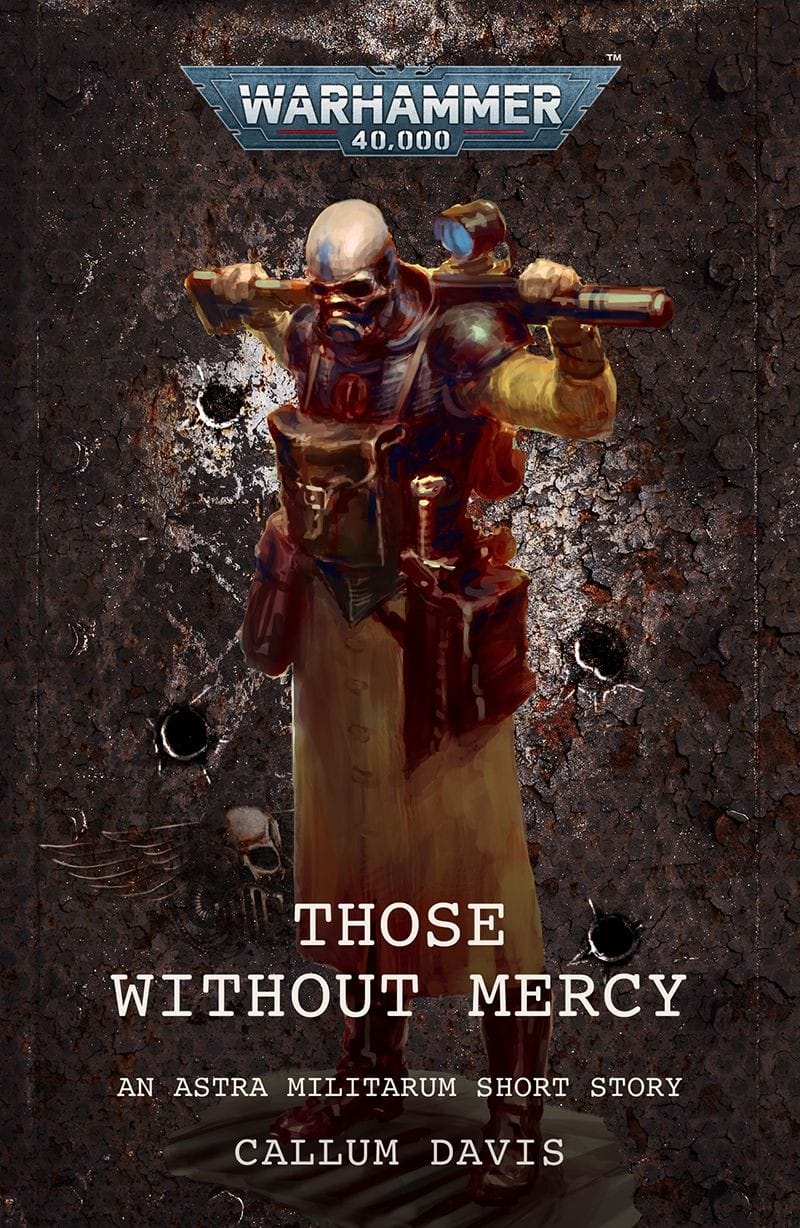
However, I am including a full sized cover for this. Man, is it cool and macabre looking!


★★✬☆☆


From the Publisher:

A commissar investigates the death of a colleague at the hands of the Savlar Chem-Dogs, and finds more than he bargained for.

READ IT BECAUSE
The Savlar Chem-Dogs are a fascinating example of a penal legion. This story explores their unsavoury reputation, but also what makes them such effective soldiers.

THE STORY
The Savlar Chem-Dogs penal legion are embroiled in a brutal conflict against the orks. When the ruthless Commissar Hasp witnesses a squad murdering a fellow commissar, he is determined to bring them to justice – but is there more to the situation than meets the eye?


Friday, August 07, 2026

Dagon (Complete Cthulhu Mythos) 3Stars


This review is written with a GPL 4.0 license and the rights contained therein shall supersede all TOS by any and all websites in regards to copying and sharing without proper authorization and permissions. Crossposted at WordPress, Blogspot, & Librarything by Bookstooge’s Exalted Permission


Title: Dagon
Series: Complete Cthulhu Mythos
Editor: Howard Lovecraft
Rating: 3 of 5 Stars
Genre: Cosmic Horror
Pages: 15
Words: 2K
Publish: 1919


Back in 2015 I read The Annotated Lovecraft, which began my journey down the Cosmic Horror Path. That particular book was as much about the notes and annotations as about the stories and while a bit overwhelming (it was over 1000 pages long), it allowed me to see just what Lovecraft was about. Since then I’ve read a lot of Cthulhu inspired fiction (the Cthulhu Anthologies linked to at the end of this review) as well as discovering the King in Yellow mythos. But I had never actually systematically read the Cthulhu Mythos as written by Lovecraft himself. The Annotated had lots of pieces, but it wasn’t complete nor did it pretend to be. After burning out on Cosmic Horror (or maybe being overwhelmed by its existential despair?) a year or two ago, I took a break. During this time, I had great success with reading Warhammer 40,000 short stories (another franchise I had taken a break from) once a month and so when I decided it was time to face Great Cthulhu again, I decided to go a similar route. But this time, I wanted the foundations, the original stories and thus I sought out this Complete Cthulhu Mythos collection. I won’t be reading one of these every month like I do for the WH40K stories, but I will just be reading through in my regular cyclical fashion. Many of these will be re-reads from my time with the Annotated, but since I’ll be focusing on each story on its own, that will help me get a better grasp on the mythology as a whole. I also suspect that this first review will be the longest, since I’m using this space to explain all of this, whereas the future reviews will not have it and be the review only. So lets dive in, shall we?

A weak, drug addicted crazy man is our narrator. This is a staple for Lovecraft. Weak humans are often the narrators. Sometimes that weakness is in themselves, ie, they are of poor character and have made terrible life choices and their brains are already rotting. Other times though, the things they have seen or experienced have broken them and they are broken that way. This narrator seems to have been a combination of both, allowing Lovecraft to showcase both versions at once. A passenger on a boat taken captive by Germans, he escapes in a lifeboat and ends up on a newly arisen large island. The island has an amphitheater at its center, showcasing a giant fishman (Dagon) and the multitude of lesser fishmen who worship him. A cyclopean monster claws its way up from the depths of the island and its voice breaks the narrator sanity. He escapes and is rescued and his story dismissed as the ravings of a madman. Thus he turns to morphine, etc to give him surcease from the voice he heard and is even more broken because of it. The story ends with him hearing something coming for him and throwing himself out the window and dying. That last bit is implied though.

Implications are another staple for Lovecraft. He can’t come straight out and say something, because then it would be a concrete fact and cosmic horror is all about the unknowable forces arrayed against humanity. So in that spirit Lovecraft often will not give specific details and while it can work, it still annoys the life out of me. It is one of the reasons he is accused of having “purple prose” and to be honest, I wouldn’t disagree.

So this story introduces to the idea of a prehistory with fantastic monsters and the idea that those monsters might still be lurking out in the undiscovered depths of the sea, biding their time until they are strong enough to rise again. That’s a pretty good introduction to Cosmic Horror and to the whole Cthulhu Mythos.

★★★☆☆


From Grokipedia

The unnamed narrator, composing his account in a garret while addicted to morphine and facing imminent suicide from exhaustion of his supply and unbearable torment, explains that his dependency arose not from weakness but from an experience too horrific to endure without oblivion.  During the early stages of the First World War, he served as supercargo on a packet ship in the Pacific that was captured by a German sea-raider; after five days of relatively fair treatment as a prisoner, he escaped alone in a small boat provisioned with water and supplies.  Adrift with no clear sense of position beyond being south of the equator, he drifted aimlessly for days under a scorching sun, seeing neither ship nor land until despair overtook him. While asleep, a massive transformation occurred: he awoke partially sunk in a vast, slimy black mire stretching endlessly in all directions, his boat grounded nearby amid rotting fish carcasses and other decayed matter that filled the air with a putrid, sinister stillness.  Concluding that an unprecedented volcanic upheaval had thrust part of the ocean floor to the surface, exposing abyssal regions hidden for eons, he waited for the mud to dry before preparing a pack and journeying westward across the desolate plain toward a distant hummock, enduring the maddening stench and oppressive silence.  Reaching the base of a much taller mound after several days, he slept in its shadow but awoke from wild nightmares determined to continue by moonlight, ascending the hill and descending into a vast chasm where a massive whitish monolith gleamed on the opposite slope. Closer examination revealed the monolith as an artificial artifact bearing unknown hieroglyphs of aquatic symbols and enormous bas-reliefs depicting grotesque, semi-human fish-like beings with webbed limbs, bulging eyes, and flabby lips, shown worshipping underwater shrines and slaying whales disproportionately small beside them.  As he gazed, the water at the monolith's base churned, and a gigantic, scaly, Polyphemus-like creature rose, wrapping its arms around the stone, bowing its hideous head, and emitting measured sounds that shattered the narrator's sanity.  In a frenzy of singing and hysterical laughter, he scrambled back across the plain to his boat amid an ensuing storm. Regaining consciousness in a San Francisco hospital after rescue by an American ship that found his drifting boat, he found his delirious accounts of risen land dismissed and did not insist.  He later consulted a prominent ethnologist about the Philistine legend of Dagon, the fish-god, but encountered only conventional skepticism.  Plagued ever since by vivid nightmares of the creature—especially under gibbous and waning moons—morphine offered only fleeting relief while enslaving him further.  Convinced the vision was real and fearing the rise of nameless abyssal beings to drag down humanity, he hears a massive, slippery body at his door, rushes to the window, and casts himself to his death.


Wednesday, July 08, 2026

Jane Austen: Henry and Eliza 4Stars


This review is written with a GPL 4.0 license and the rights contained therein shall supersede all TOS by any and all websites in regards to copying and sharing without proper authorization and permissions. Crossposted at WordPress & Blogspot by Bookstooge’s Exalted Permission

Title: Jane Austen: Henry and Eliza
Series: ----------
Author: Jane Austen
Rating: 4 of 5 Stars
Genre: Juvenilia
Pages: 6
Words: 2K
Publish: 1788


I just laughed out loud while reading this. I gave it the “humor” tag because of that. It is complete satire but it is just hilarious. I liked the ending where Eliza raises an army and destroys her enemy. It was just written so blithely and simply done!

Once again we get another “modern girl” cover, but these are about the only ones I can find for the individual stories. All of these stories are contained within Austen’s “juvenilia” but I want them read and reviewed on their own. I doubt I’m ever going to read them again, so I don’t want a post labeled “Juvenilia” and two sentences about how short these all are. At least now I will remember that this particular story tickled my funny bone to no end. Good enough.

★★★★☆


From “https://www.janeaustensummer.org/post/austen-250-reader-henry-eliza”

Sir George and his wife, Lady Harcourt, while supervising the haymakers in their work happen to come upon an orphaned child who is nestled in the foliage. Taken with the beautiful young girl, and having no children of their own, the couple adopt the foundling, name her Eliza, and raise her according to their own code of principles—placing a premium on possessing a love of virtue while harboring a hatred of vices.

            Life is splendid for all until, just after she turns the age of eighteen, Sir George and Lady Harcourt catch Eliza stealing a fifty-pound banknote. She is promptly turned out of the house, but she bears the punishment well. Rather than despair, she asks her friend, Mrs. Sarah Wilson, to help her acquire a place serving as a personal companion to a great lady. Pleased to be able to aid Eliza in this endeavor, Mrs. Wilson writes a letter of recommendation to the Duchess of F., asking the greatly esteemed lady to welcome Eliza into her home.

            The Duchess of F. is delighted to be of assistance and sets out to make Eliza’s acquaintance at once. She has but one daughter, Lady Harriet, who is soon to be wed to Mr. Henry Cecil, so she is thrilled to welcome Eliza as her new companion. Harriet, as well, is inclined to like Eliza and insists they behave as though they are sisters.

            The affectionate bond between them is not nurtured for long because shortly thereafter, Eliza and Henry fall in love. They elope and leave behind only a short, callous letter that provides no consolation to the Duchess or her daughter. Enraged, Her Grace hires three hundred men and orders them to track the couple. Should they kill Henry and Eliza on sight, that is permissible, but the Duchess would prefer they be brought back alive so she may be granted the pleasure of confining and torturing them herself.

            The couple flees and winds up living in France for three years. During that time, Eliza gives birth to two boys, but has the great misfortune of burying her husband while abroad. Now widowed, she wishes to return to England. Upon setting foot on land at Dover, she and the boys are seized by the Duchess’ men and conveyed to a prison.

            After being trapped for a few weeks, Eliza and her children manage to escape, but then they have no means by which to live. She decides they must seek out Sir George and Lady Harcourt. She hopes they will be merciful.

            When she and the children get closer to her former home, she spies Lady Harcourt and Sir George in a carriage and calls out to them. That is when Lady Harcourt reveals an odd secret. Eliza is not just an adopted child but is their biological daughter. When Sir George sailed for America, she was pregnant and eventually gave birth to a daughter. Certain that her husband would be disappointed to see a little girl rather than the son he so desired, she hid the child in a haycock. She forgot all about doing as much until she heard Eliza call out to them presently. But now, she recognizes the voice of her daughter and wishes to reconcile with her completely. Sir George agrees. He absolves Eliza from all wrongdoing.

            Just as soon as she is restored to her former place at Harcourt Hall, she raises an army and bids them march against the Duchess of F. Eliza earns the commendation and gratitude of thousands when her men demolish the Duchess’ prison cell.


Wednesday, June 24, 2026

The Redoubt (Warhammer 40K: Astra Militarum) 3Stars


This review is written with a GPL 4.0 license and the rights contained therein shall supersede all TOS by any and all websites in regards to copying and sharing without proper authorization and permissions. Crossposted at WordPress & Blogspot by Bookstooge’s Exalted Permission\


Title: The Redoubt
Series: Warhammer 40K: Astra Militarum
Author: John Sollitto
Rating: 3 of 5 Stars
Genre: SF
Pages: 18
Words: 6K
Publish: 2025


This short story was about some of the Astra Militarum on some contested world fighting the Tau and their human allies with no reinforcements coming.

It is short, brutal and you know at the end, ultimately futile, since there are no reinforcements on their way. We follow Captain Mazzon as he attempts to hold out at a Redoubt (hence the name of the story) against the Tau war machine. He knows it is futile, that it would be better to fade away and carry out a guerrilla warfare style fight, but he has his orders. So they fight.

A lot of the short stories/novellas in this Death and Duty anthology have been published before and hence have their own covers and everything. This story was written just for this anthology and so there is no entry at Devilreads nor is there an official cover for it. That set me down the path of making my own cover for it. I used the logo of the Astra Militarum and then used the Bleeding Cowboy font to write in the title and the author. It looked rather plain, and gave zero info that it was in the Warhammer 40K universe, so I added that little subtitle There was still a lot of black space at the bottom and I realized that in 10 years, I might not remember this was in the “Death and Duty” anthology, so I added that to the cover as well. Then I decided I’d done enough and that was that. Now, the bleeding cowboy font isn’t the easiest to read and it really doesn’t fit into the WH40K universe but I think it looks cool. I did consider trying some sort of blocky, chunky font to give it the same aspect I imagine the people in the Astra Militarum all have, but that wouldn’t have looked as cool, so I didn’t. I know there are a couple of more original short stories in the Death and Duty anthology, so maybe with those I’ll try some other font.

★★★☆☆


From the Publisher:

There is nothing from the publisher because Black Libary is a scumbag filled company with lazy, no-good, greedy money grubbers who have sold their souls to chaos and eat babies for breakfast.


Sunday, June 07, 2026

Jane Austen: Edgar and Emma 3Stars


This review is written with a GPL 4.0 license and the rights contained therein shall supersede all TOS by any and all websites in regards to copying and sharing without proper authorization and permissions. Crossposted at WordPress & Blogspot by Bookstooge’s Exalted Permission


Title: Jane Austen: Edgar and Emma
Series: ----------
Author: Jane Austen
Rating: 3 of 5 Stars
Genre: Satire
Pages: 4
Words: 1K
Publish: 1787


Ahhhh, shortest read of the year! I’m not even including a synopsis because it is just a scene of two families meeting and one teen girl crying because her love interest didn’t come because he’s off at college and her whole life is now ruined.

Hahahahahahaa. Oh, Austen really knew how to lay on the satire. She does it so masterfully in just these few pages.

★★★☆☆


Thursday, May 14, 2026

The First Distiller (The Russians) 3Stars


This review is written with a GPL 4.0 license and the rights contained therein shall supersede all TOS by any and all websites in regards to copying and sharing without proper authorization and permissions. Crossposted at WordPress & Blogspot by Bookstooge’s Exalted Permission


Title: The First Distiller
Series: (The Russians)
Author: Leo Tolstoy
Translator: Aylmer Maude
Rating: 3 of 5 Stars
Genre: Classic
Pages: 23
Words: 6K
Publish: 1886

A short morality play about the dangers of having too much and how alcohol is straight from the devil. Kind of like rock music ;-)

While I agree with both of Tolstoy’s points, I don’t agree with how he gets there or some of his other ideas evinced in this play. In many ways, this reminded me of Lewis’s The Screwtape Letters in that we follow the inmost workings of demons and hell. Now, Lewis was having fun with the whole higher education system that he was part of and applying that to hell and its denizens. With what Tolstoy is doing, I can’t quite come to the same conclusion. I don’t know enough about how Russian Christians viewed demons and hell in the 1800’s to be certain that Tolstoy isn’t being serious. Once again, I am saddened at the lack of Biblical knowledge in regards to how Tolstoy forms his ideas here. The Bible has a lot to say about alcohol (mainly about NOT getting drunk) and it also directly addresses materialism/consumerism.

This is an ongoing issue I have with these old school Russians. Is it just the culture they are from that the Bible is never directly used, or is it that they viewed it as a good piece of literature but ultimately empty, or is it something else entirely? I understand Dickens and his non-Christianity even while he crusaded for morality. He was a creature of his culture and couldn’t escape it. But Tolstoy? I simply do not know enough. Crap. This means at some point I’ll probably have to read some biographies and then I’ll find out more than I wanted to and regret it. I always do after all.

And for the record, Noah (of Noah’s Ark fame) was the first distiller that we know of.

★★★☆☆


From Wikipedia.org

The story opens with a peasant preparing to plow a field. Having gone without breakfast, he is careful to hide his dinner, a small crust of bread, under his coat. After plowing the field the peasant is hungry and ready for his dinner, but when he picks up his coat he sees that the bread is gone. It had been taken by a little devil, who was convinced that the peasant would become wrathful. Instead, the peasant decided that whoever took his bread must have needed it more than him, and he went on his way.

The little devil is brought before the Chief Devil, who is not pleased that the peasant was not corrupted. He threatens to douse the little devil with holy water if he fails again, and the little devil is sent out for another attempt at corrupting the peasant.

The little devil takes the guise of a pilgrim, and in this guise he gives the peasant farming advice throughout the seasons. The peasant grows a great surplus, and he begins to live much better than he had. One season, the little devil convinced the peasant to distill his extra corn into vodka, and the peasant takes his advice. The little devil then brings the Chief Devil to see the result of his works.

The devils witness a party hosted by the peasant, where all of the guests and the host himself indulge in several glasses of vodka. They start off joking and jovial, but as they consume more vodka, the party goers become more abusive and irate. When they finally leave the party they are thoroughly drunk, falling over each other and landing in the mud.

The Chief Devil is astonished. He is convinced that the drink must have been made from the blood of beasts to make the men act so beastly. The little devil explains that it was simply vodka, and he just needed to convince the peasant to turn God's gift of corn into idle liquor. The little devil knew that all men have a savage side inside of them, and when the peasant had just enough food to survive, the savage beast inside him was kept silent. But as soon as the peasant accumulates a surplus, corruption sets in. Convinced that the corruption of the peasants is complete, the Chief Devil awards the little devil a promotion.


Friday, February 13, 2026

PSA: Novels vs Novellas vs Short Stories


This is going to be one of those posts, mercifully short, where I define something so that you can understand me better. I put most text based books into one of three categories:

  • Novel
  • Novella
  • Short Story

Because I list page and word count in each of my reviews, this post is not as critical as it might have been even 5 years ago. But when I call a book a Novel or a Novella or a Short Story, I'd like you to know how I define that so we're all speaking the same language, at least on this blog. Once you leave the safety of Bookstoogelandia, all bets are off in regards to definitions.

Therefore, let it be known throughout all nations and peoples and tongues and tribes, that from this day forward, a Novel shall be a book consisting of 100+ pages, a Novella shall be a book consisting of 26-99 pages and a Short Story shall be a book consisting of 1-25 pages.


Tuesday, February 03, 2026

Jane Austen: Frederic and Elfrida 3Stars


This review is written with a GPL 4.0 license and the rights contained therein shall supersede all TOS by any and all websites in regards to copying and sharing without proper authorization and permissions. Crossposted at WordPress & Blogspot by Bookstooge’s Exalted Permission

Title: Jane Austen: Frederic and Elfrida
Series: ----------
Author: Jane Austen
Rating: 3 of 5 Stars
Genre: Satire
Pages: 9
Words: 2K
Publish: 1787


Brona has graciously agreed to continue to host the #ReadingAusten into 2026 as some of us (ie, me) had more Austen to read. The link to her master post with all the various posts by Austen readers can be found at the end after my avatar. So thank you Brona, I appreciate your thoughtfulness.

For whatever reason, unlike some of the previous Juvenilia works where I felt that they never should have been released and was almost embarrassed to read them, Frederic & Elfrida was simply hilarious and a wonderful short story parody. I chortled my way through all 9 pages and laughed my head off at the end where Elfrida gets Frederic to finally marry her by having fainting spells.

It is little stories like this that keep me reading this Juvenilia stuff. I feel like I am a better man for reading the cast off writings of a 12 year old girl from almost 250 years ago. Ain’t life grand!? :-D

★★★☆☆


Synopsis

Elfrida and Frederic are cousins who were born on the same day, grew up together, and were very much alike.  It is not surprising that their parents determine they should be married.  Austen skips around to introduce Elfrida’s friend, Charlotte, who is visiting her aunt when she receives a letter from Elfrida requesting that she purchase Elfrida a bonnet.  Charlotte is a very amiable young woman, so of course, she obliges.

When Charlotte returns home and is welcomed back “with the greatest Joy” by Elfrida and Frederic, they take a walk and spy two girls, Jezalinda and Rebecca, the daughters of Mrs. Fitzroy, and a friendship develops.

After the meeting with the Fitzroys, the last few pages breeze by, with a relationship frowned upon then embraced (frowned upon because Mrs. Fitzroy thought the couple too young for matrimony at 36 and 63) and a melodramatic suicide following one character’s acceptance of two marriage proposals seemingly within a “short time” of one another, meaning more like hours or even minutes.  Meanwhile, a wedding date is never set for Elfrida and Frederic, and when time passes and Frederic seems almost lost to her, Elfrida secures her desired outcome through fainting fits.


Tuesday, December 16, 2025

The Phoenix on the Sword (Conan Chronicles #1) 3Stars


This review is written with a GPL 4.0 license and the rights contained therein shall supersede all TOS by any and all websites in regards to copying and sharing without proper authorization and permissions. Crossposted at WordPress & Blogspot by Bookstooge’s Exalted Permission

Title: The Phoenix on the Sword
Series: Conan Chronicles #1
Author: Robert Howard
Rating: 3 of 5 Stars
Genre: Fantasy
Pages: 27
Words: 9K
Publish: 1932


After my last Conan pastiche (Conan and the Mists of Doom), which was horrible, like several of the previous pastiches, I gave up. When one sours on pastiches, it usually means it is time to return to the original material. I had read The Essential Conan (comprising The Hour of the Dragon, People of the Black Circle and Red Nails) back in ‘18 and thoroughly enjoyed it. But trying to track down the other original Conan stories seemed like a real chore, as it was a mix of short stories, novellas and novels and they were scattered all over the place and in various collections by various companies at various times. It was a gigantic ball of messiness and I wanted nothing to do with it. Reading is meant to be fun, not a flipping second job. Then I discovered that Delphi Classics had released one of those Complete Collections of Robert Howard and suddenly I was on easy street. That collection has all his other stuff too, but the Conan stories are linked in the TOC by publication date, so I just have to click on that and I am set.

Which brings us to now. I am going to read all of the original Conan stuff by Howard, story by story, and take my time enjoying the pulpy goodness of it all. I am dividing these up into three different categories: Short Stories, Novellas and Novels. I am calling any story with 10K or less of words a short story while a Novella will be 10K-40K and a Novel will be anything over 40K. Of course, the lines are all squishy, so I might take page numbers into account too, but that gives you the general idea. There are only two full novels and approximately nineteen short stories and novellas. That means I’ll be reading a lot more short stories about Conan over the next couple of years. And with that long winded introduction out of the way, onto the actual review.

This short story takes place much later in Conan’s career. He is currently king of Aquilonia (the big cheese kingdom) and several nobles are trying to depose him. One of them has a pet wizard who breaks free and summons a demon to kill all the nobles (for how they looked down on him) and Conan so that said wizard can become king. Well, there’s another Good Wizard ™ sleeping away in limbo and he summons Conan in a dream and gives him a magic sword that allows him to slay the demon. Thus Conan stays king of Aquilonia.

It is kind of odd to start off with Conan nearer the end of his life than at the beginning, but Howard never allows us to forget that Conan is still a powerful barbarian. It also sets out the template for Conan stories. Some disgruntled people, some magic, some regular fighting, some magic fighting and then Conan kicking butt. The magic also has hints of the cosmic horror about it, which just fits so much better into this Hyborean age than bleeding Merlin with his disneyfied bippity boppity boo.
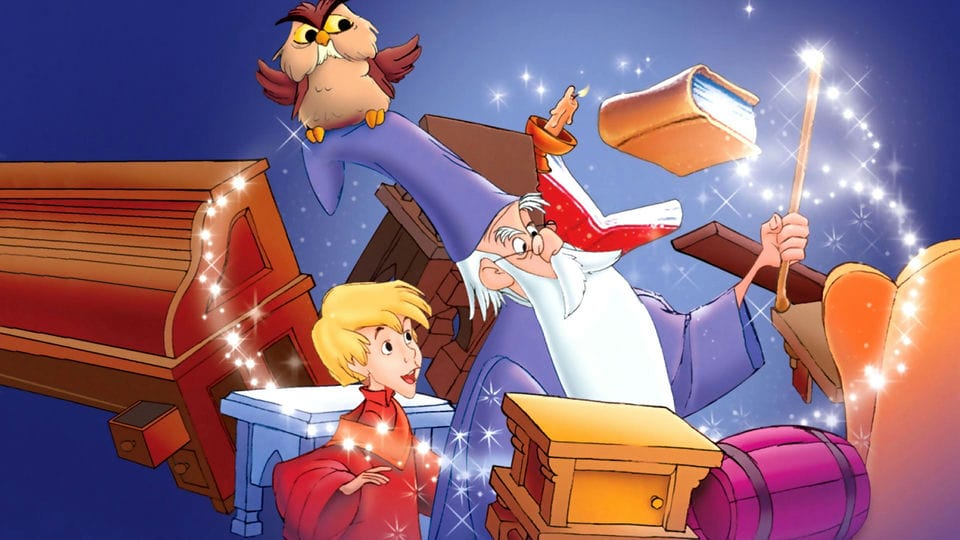
Thoth-Amon would have their guts for garters...

We are also introduced to Thoth-Amon, a wizard of dark Stygia who plays a role in more than one pastiche. He is the one that summons the demon and his fate is left unresolved, unlike the plotters who all die at the claws of the demon or Conan’s sword.

While I only gave this 3stars, I was still pretty pleased with it. Howard gives us all of the information we need for “this” story with just hints at the wider world of Conan without over burdening the reader. Reading a short story by itself is whole different beast than reading a novel or a whole series of novels or even a whole book of short stories. As such, you’ll have to give me a few stories to find my review footing, as it were. My standard rating will be 3stars until I have a better grasp of Conan as a whole and can be a bit more nuanced, if I feel like it. Or I might just stick with my more typical “I liked/disliked it, the end” kind of review.

I am also calling these official Howard stories about Conan the “Conan Chronicles” to easily separate them from all the Conan the Barbarian pastiches I’ve been reading. It is messy and the organizational part of my soul winces, but I do not want the official stories mixed in with the pastiches. I am including a link under my avatar at the end to all the pastiches though, so if someone wants to they can see what a minefield they have to navigate.

I was able to find an actual cover for this one. Most of what I found was the Weird Stories magazine cover that it was originally in. I hope to have an actual cover for each story, but am not counting on it. I’m certainly not going to be generating my own, even though that would be really nice.

★★★☆☆


From Wikipedia

A middle-aged Conan of Cimmeria tries to govern the turbulent kingdom of Aquilonia.

Conan has recently seized the crown from King Numedides after strangling the tyrant on his throne, but the Cimmerian is more suited to swinging his broadsword than signing official documents. The Aquilonians who originally welcomed Conan as their liberator have turned against him due to his foreign blood, and construct a statue to Numedides' memory in the temple of Mitra; priests burn incense before their slain king, hailing it as the holy effigy of a saintly monarch who was killed by a red-handed barbarian.

A band known as the Rebel Four forms: Volmana, the dwarfish count of Karaban; Gromel, the giant commander of the Black Legion; Dion, the fat baron of Attalus; and Rinaldo, the hare-brained minstrel. Their goal is to put the crown in the hands of someone with royal blood, and to this end they recruit the services of a southern outlaw named Ascalante. However, Ascalante secretly plans to betray his employers and claim the crown. Ascalante also enslaves Thoth-Amon, a Stygian wizard who has fallen on hard times: A thief had stolen Thoth-Amon's ring and left him defenseless, forcing him to flee from Stygia; while disguised as a camel driver, he was waylaid in Koth by Ascalante's reavers. The rest of his caravan was slaughtered, but Thoth-Amon saved himself by revealing his identity and swearing to serve Ascalante.

The conspirators plan to assassinate King Conan when he is unprepared and defenseless, but Thoth-Amon discovers that his ring of power is in Dion's possession, murders him and summons a fanged ape-like demon to slay Ascalante. Conan in turn is warned of this event in a dream by a long-dead sage named Epemitreus, who marks Conan's sword with a mystical phoenix representing Mitra, a Hyborian god. Conan awakens and, prepared for the attack, slays the three remaining members of the Rebel Four, breaking his sword upon the helm of Gromel and using a battle-axe against the rest of his would-be assassins. Conan hesitates to kill Rinaldo, whose songs once touched the King's heart - this scruple proves costly, as Rinaldo manages to stab him before being killed. Ascalante, his goal in reach, moves to finish off the wounded king, but is killed by Thoth-Amon's demon before he can strike, and the demon is then slain by Conan with the shard of his enchanted sword.

Conan's courtiers hesitate to believe his tale, as the demon has evaporated, until they spot the shape its blood has left on the floor.


Thursday, August 21, 2025

Jane Austen: Scraps 3Stars


This review is written with a GPL 4.0 license and the rights contained therein shall supersede all TOS by any and all websites in regards to copying and sharing without proper authorization and permissions. Crossposted at WordPress & Blogspot by Bookstooge’s Exalted Permission

Title: Scraps
Series: ----------
Author: Jane Austen
Rating: 3 of 5 Stars
Genre: Juvenilia short story
Pages: 7
Words: 2K
Publish: 1790


This section of the Juvenilia was literally labeled “Scraps” because that is all these stories were. There are five “stories” but it only takes up about seven pages. They are not even as brief as some of the “Letters” from before. There is no proto-story, just some writings that were obviously Austen just having that itch to write and this is the stuff that she scribbled in the margins of her notebook, literary doodles as it were.

There isn’t really even enough to talk about any particular “Scrap”. As a Jane Austen fan, this is the kind of thing I am glad to read to give me a fuller picture of her as an author but it’s not something I plan on ever re-reading or to wax eloquent on.

★★★☆☆


Table of Contents:


  • Scraps to Miss Fanny Catherine Austen

  • The female philosopher

  • The first Act of a Comedy

  • A Letter from a Young Lady

  • A Tour through Wales

  • A Tale


Tuesday, July 08, 2025

Jane Austen: A Collection of Letters 3Stars


This review is written with a GPL 4.0 license and the rights contained therein shall supersede all TOS by any and all websites in regards to copying and sharing without proper authorization and permissions. Crossposted at WordPress & Blogspot by Bookstooge’s Exalted Permission

Title: A Collection of Letters
Series: ----------
Author: Jane Austen
Rating: 3 of 5 Stars
Genre: Juvenilia short story
Pages: 32
Words: 10K
Publish: 1789


This was tantalizing. Austen wrote 5 letters at the age of 14. Each letter is not connected to the other and tells a very short story, or at least lets us get a glimpse of a story in progress. Most of the names we have come to know in her novels make an appearance here and I must say, it was wicked weird for me to see “Willoughby” as a good guy.

Part of me wishes I had read this whole Juvenilia collection as a whole (I still have more to go) but the other part is glad I am reading just bits and pieces. It keeps it from blending all together into a one big slurry.

★★★☆☆


From The Internet:

A Collection of Letters is an epistolary short story collection written by Jane Austen when she was fourteen years old. Although the novels Austen became known for were not published until she was in her thirties, she was an active writer from the age of twelve, frequently composing epistolary works such as A Collection of Letters. Austen eventually compiled 29 of her early writings in three notebooks that became known as the Juvenilia and that she called “Volume the First”, “Volume the Second”, and “Volume the Third”, including A Collection of Letters in “Volume the Second”.

A Collection of Letters is set contemporaneously to Austen’s writing and consists of a series of five letters, each written by a woman of high society living in Great Britain. Unlike Austen’s later epistolary works, A Collection of Letters is not a novelette; each of these five letters tells a self-contained story, with no characters appearing in multiple letters. Nonetheless, the collection is unified in its lighthearted, humorous tone. Austen dedicated A Collection of Letters to her cousin Jane Cooper, who married famed Royal Navy officer Thomas Williams two years later and who died in a horse accident before the end of that decade; Williams went on to marry again twice, reputedly because his first marriage was so happy. Ironically, there are multiple parallels between Cooper’s later life and the second letter of this collection.

Letter the First

Letter the Second

Letter the Third

Letter the Fourth

Letter the Fifth


Thursday, May 15, 2025

The History of England 2.5Stars


This review is written with a GPL 4.0 license and the rights contained therein shall supersede all TOS by any and all websites in regards to copying and sharing without proper authorization and permissions. Crossposted at WordPress & Blogspot by Bookstooge’s Exalted Permission

Title: The History of England
Series: ----------
Author: Jane Austen
Rating: 2.5 of 5 Stars
Genre: Juvenilia short story
Pages: 28
Words: 7K


This is just what you’d expect from a snarky teen writing about a subject they didn’t want to be writing about. I just rolled my eyes and plowed through.

★★✬☆☆


From Wikipedia.org

The work is a burlesque which pokes fun at widely used schoolroom history books such as Oliver Goldsmith's 1771 The History of England from the Earliest Times to the Death of George II. Austen mockingly imitates the style of textbook histories of English monarchs, while ridiculing historians' pretensions to objectivity. It was illustrated with coloured portraits by Austen's elder sister Cassandra, to whom the work is dedicated.


The second page of the History reads:


The History of England

from the reign of

Henry the 4th

to the death of

Charles the 1st


By a partial, prejudiced, & ignorant Historian


To Miss Austen, eldest daughter of the Revd

George Austen, this work is inscribed with

all due respect by

The Author


N.B. There will be very few Dates in

this History.


Her History cites as sources works of fiction such as the plays of Shakespeare and Sheridan, a novel by Charlotte Turner Smith and the opinions of Austen's family and friends. Along with accounts of English kings and queens which contain little factual information but a great deal of comically exaggerated opining about their characters and behaviour, the work includes material such as charades and puns on names.


While the work offers her family humorous vignettes on English rulers from Henry II to Charles I, many entries focus on royal women, such as Anne Boleyn, Lady Jane Grey, and Mary, Queen of Scots, who are denied entries but are significant figures in English history. Mary, Queen of Scots, in particular plays an important role in Austen's History, which also acts as a vindication of the executed cousin of Elizabeth I. Elizabeth I is treated as a tyrant, rather than a good leader, thus showing Austen's affinity for Mary and the Stuart monarchs.


Mons's Goblin Raiders - MTG 4E

  Most goblin cards are funny or amusing and make light of the goblins as a race. Cards like this try to show that they are a real thre...