This review is written with
a GPL 4.0 license and the rights contained therein shall supersede
all TOS by any and all websites in regards to copying and sharing
without proper authorization and permissions. Crossposted at
WordPress & Blogspot by Bookstooge’s Exalted Permission
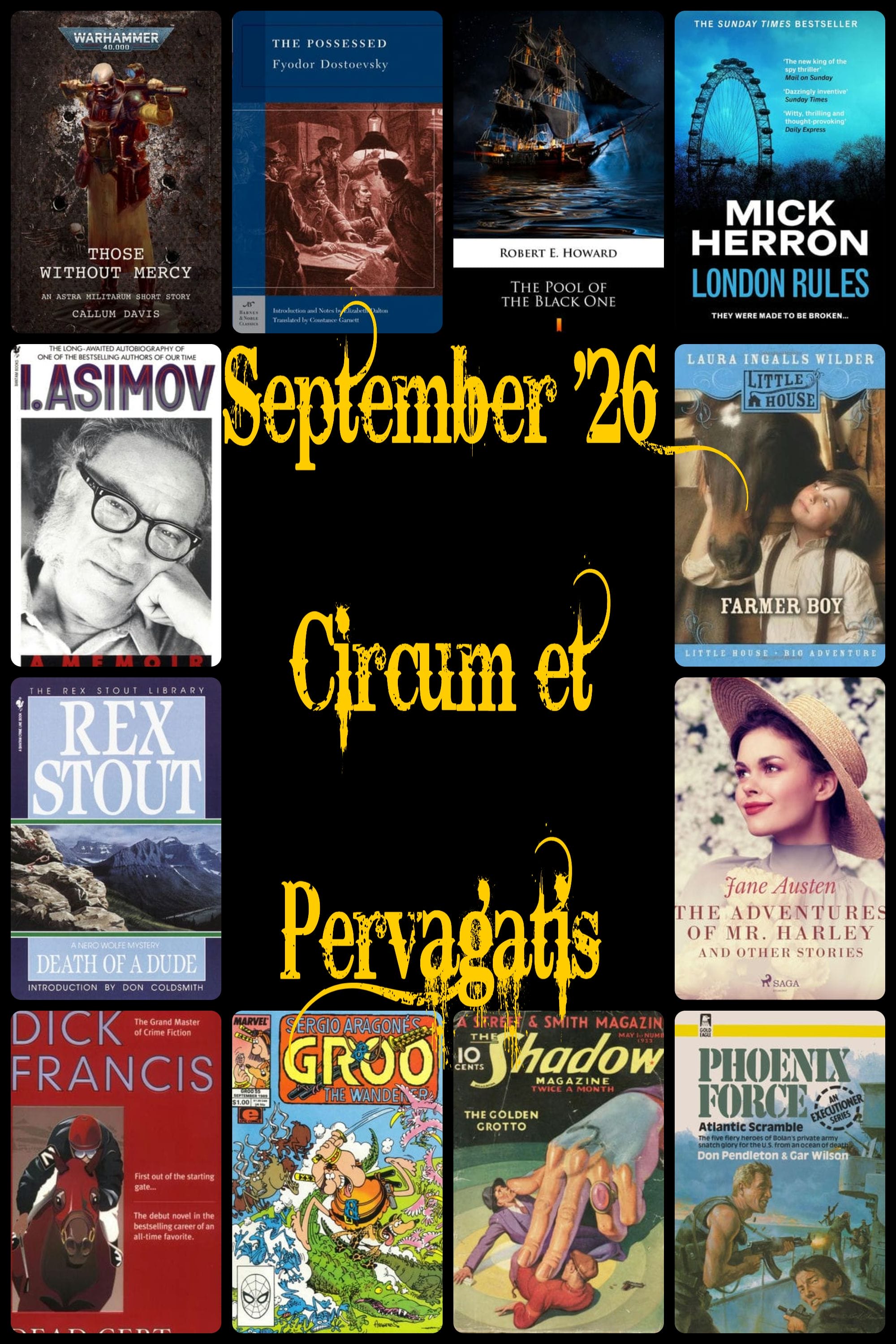
Title: I, Asimov
Series:
Asimovian Memoirs #3
Authors: Isaac Asimov
Rating:
5 of 5 Stars
Genre: Autobiography
Pages:
914
Words: 214K
Publish: 1994
The previous two Asimovian Memoirs (In
Memory Yet Green and In
Joy Still Felt) were very dense, factually heavy books. They
were interesting but slow going and strictly chronological. I,
Asimov repeats a lot of the data
from those two books but brings us up to date to his illness in the
90’s and a final chapter by his second wife Janet, brings things to
a close post-mortem.
This
was a much lighter book, in tone. It’s not the bare facts of the
matter, but as much about how Asimov felt about the subject he was
writing about as about the subject itself. Much more of a “memoir”
than a straight up autobiography. As such, I am very glad to have
read the previous two books ahead of this, as it gave me a much
deeper laid foundation to put this book on.
In
that regards, I never felt bored by the repeating of data I had
already read, because it was written in a different manner and with a
different goal in mind. Asimov doesn’t go nearly as deep on
subjects so there’s no “cut and paste” feel, which is
important. He also talks about things from a more human perspective
(how it made him feel) instead of just the facts. He had a section on
his son David which opened up a little bit more about why he hadn’t
written very much about him in the previous books. He also talks a
bit more candidly about his first wife and the divorce. Nothing
salacious or mean spirited, but being honest about their
incompatibilities and inherent character flaws in both of them that
they couldn’t or wouldn’t overcome.
Because
this wasn’t strictly chronological, but topical, you can’t just
skip sections thinking you’ve already know all the info from the
previous two books. Some things yes, were no different but many of
the areas were expanded upon post-1975, so there’s a good 15 years
of new thoughts and happenings, even about people and events from his
past. He talks about the Foundation novels and the Robot novels that
happened post-1975 and it was fascinating to get his thoughts on
them, to the point where I am seriously considering reading the rest
of the Foundation books even though when I read them in the 90’s I
wasn’t a fan.
This
book really brings out the fact that Asimov was a short story guy.
Whether fiction or non-fiction, he excelled at the under-10,000 word
format. He could churn out articles for papers and magazines week
after week without breaking a sweat. It isn’t until he talks about
the novels that it becomes evident how hard it was for him to write
when he wasn’t enjoying the process of writing.
From
this, and the previous books, it is evident that Asimov had a huge
ego. He parades around the issue and paints it in a positive light as
promoting himself because no one else would, and while that was true
to some extent, you can tell that he thought he was the best, period.
It comes more to light in how he interacts with others and glimpses
get through his writing. One of the issues was his atheism. He writes
a chapter or two about religion and from that you can tell he doesn’t
just disagree with anyone who believes in the supernatural, but that
he despised them, for a variety of reasons. It was also evident that
he simply didn’t understand the Bible as a whole but chose bits and
bobs to talk about and skewered them that way. That stood out to me
because he claimed throughout the book to be such an intellectual and
that he was always judging things fairly and rationally. It just
wasn’t so.
I
really enjoyed this memoir and felt like it was a great capstone to
the trilogy. The first two books dug a deep foundation and this put
up the house and all the pretty windows. While I would recommend this
book as a standalone, I would really recommend people read the whole
Asimovian Memoirs trilogy to get the full experience.
★★★★★
From Asimov.fandom.com
It's a series of personal essays rather
than a strictly chronological narrative, covering a wide range of
topics from his childhood to his literary career and personal life.
The book explores his thoughts on science, society, his colleagues,
and even religion, offering a glimpse into the mind of a prolific
writer.